Best Paper Award · ICMEM 2026
Athira Raj · Research Scholar, Srinivas University, Mangalore
“Land Use–Land Cover Change and Soil Degradation in Alappuzha District, Kerala: A Multi-Temporal Geospatial Assessment”
The gap between knowing a tool and using it well should not depend on which institution you walked into.
Practical GIS and remote sensing training, faculty development programmes, and geospatial project work. I help learners, faculty and institutions turn raw satellite data into maps and analysis they can rely on.

 Geospatial CampusGIS Manager · Nagercoil branch
 SysGlobVice President
 Holy Cross CollegeProf. of Practice
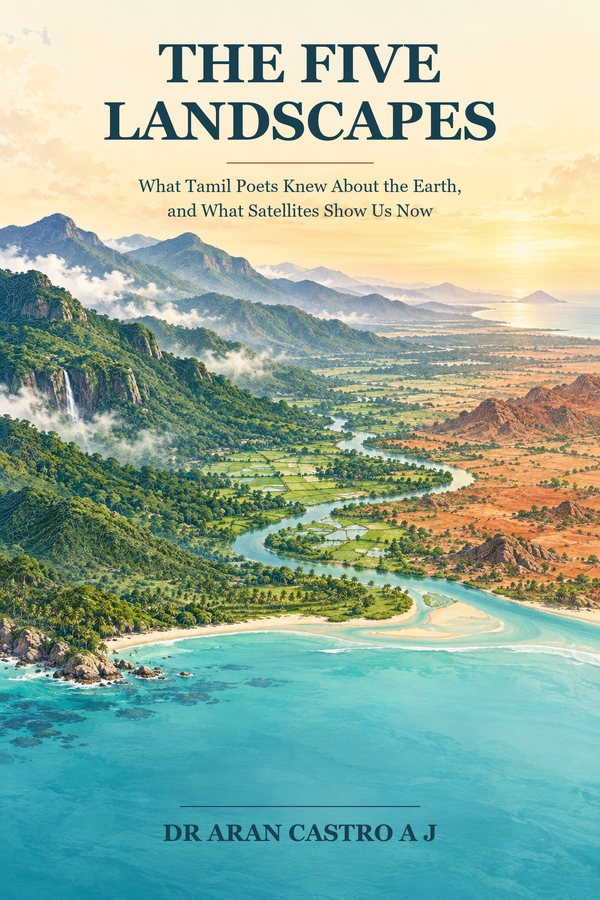
What Tamil Poets Knew About the Earth, and What Satellites Show Us Now
Classical Tamil poets sorted the land into five landscapes: hills, forests, river plains, shore and dry country. This book reads those poems alongside fifty years of satellite records for India's far south.
Kindle ₹120 Free PDF · Kindle edition on Amazon →
One calm app for your mood, tasks, focus, games and people. Everything you do grows one flower garden, and on low days it asks a trusted friend to call you.
A hands-on programme taught by a working GIS Manager, live online or in person across four cities. Real satellite data, real workflows, a project you keep.
The training is good and the teacher is always helpful. A great place to build skills in GIS and Remote Sensing. Herlin HJ, course alumna
Four quick fields. We reply on WhatsApp within 24 hours.
Students and faculty want hands-on geospatial skills, but most courses teach buttons not workflows, so I teach GIS the way I use it daily for research, with every module ending in a real deliverable.
02 Faculty developmentIntensive, hands-on Faculty Development Programmes delivered at nationally recognised institutions including the University of Madras, IIRS, SRM University and TRP Engineering College. One-day, three-day or five-day formats, on-site anywhere in India or online, with materials, datasets and certificates included.
03 ProjectsScoped, written-proposal projects for coastal vulnerability atlases, multi-year LULC change studies, watershed analytics and climate-trend mapping. Recent work: 8-week CVI atlas · 12-week LULC study · 4-week climate dashboard. Reproducible workflow handed back at completion.
A 20-minute WhatsApp or call to understand your research, timeline, and what "done" looks like for you.
A clear written proposal: deliverables, data sources, milestones, fees. No surprise costs, no scope creep.
Weekly check-ins. Shared folders. You see every map, every script, every draft, as it's made.
Final maps, project files, and a reproducible workflow with full methodology documentation, all yours to keep.
“Land Use–Land Cover Change and Soil Degradation in Alappuzha District, Kerala: A Multi-Temporal Geospatial Assessment”
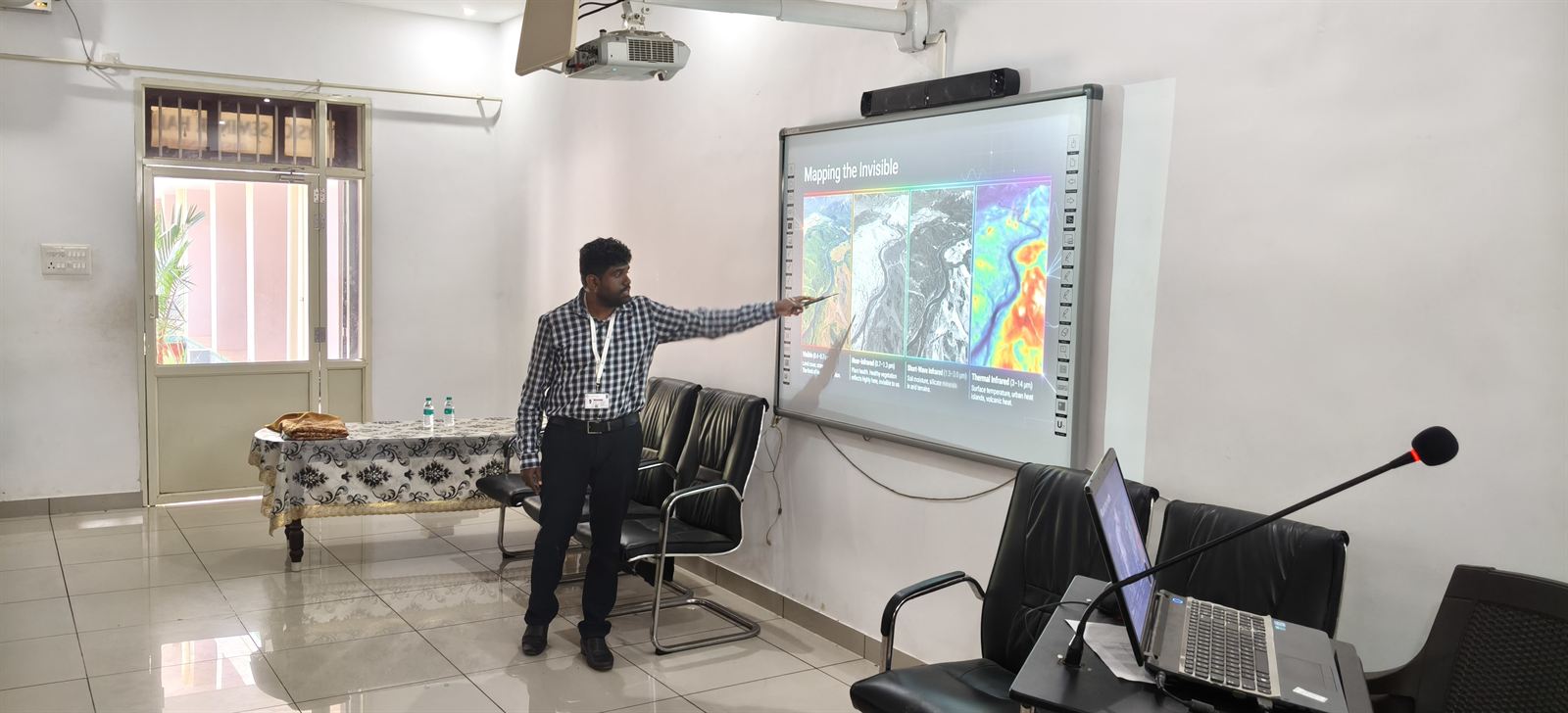
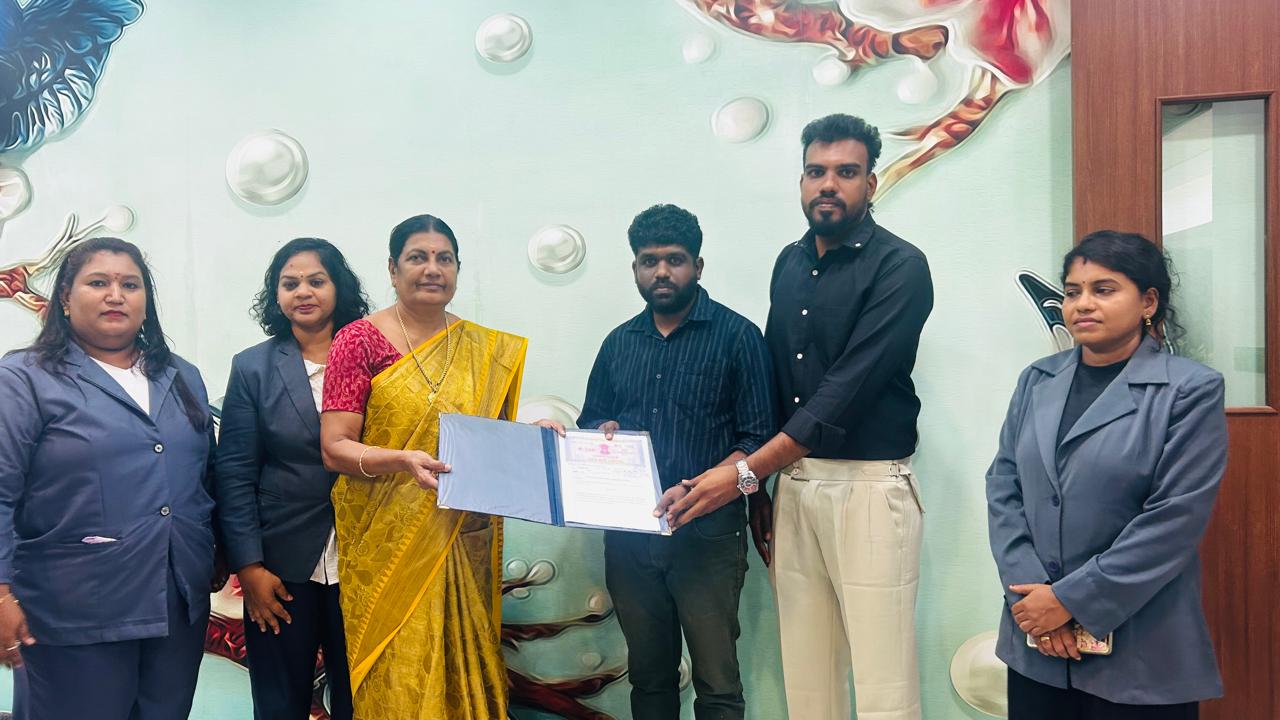
Why Kolli Hills is flat · a one-minute geology explainer in Tamil · tap to play
From LinkedIn · view the post
Completed a comprehensive hands-on GIS training program covering fundamentals to advanced applications in ArcGIS, ArcGIS Pro, QGIS, and open-source tools. Conducted remote sensing analysis using satellite imagery for tasks such as Land Use Land Cover (LULC) mapping, NDVI calculation, change detection, and vegetation health monitoring.
Geospatial Campus provides expert coaching in GIS and remote sensing software, featuring experienced instructors and modern infrastructure. Their budget-friendly courses make advanced learning accessible to all students.
Geospatial Campus provides good learning experience in GIS. The classes are useful and the faculty is supportive.
I highly recommend to trust them.
Coordinate & format converters, map measure, GeoJSON viewer, EPSG/CRS lookup, bounding box, tile/quadkey, GSD & geodesic calculators, all in your browser, nothing uploaded.
Step-by-step Land Surface Temperature retrieval from Landsat 8 with formulas, raster calc expressions, and troubleshooting.
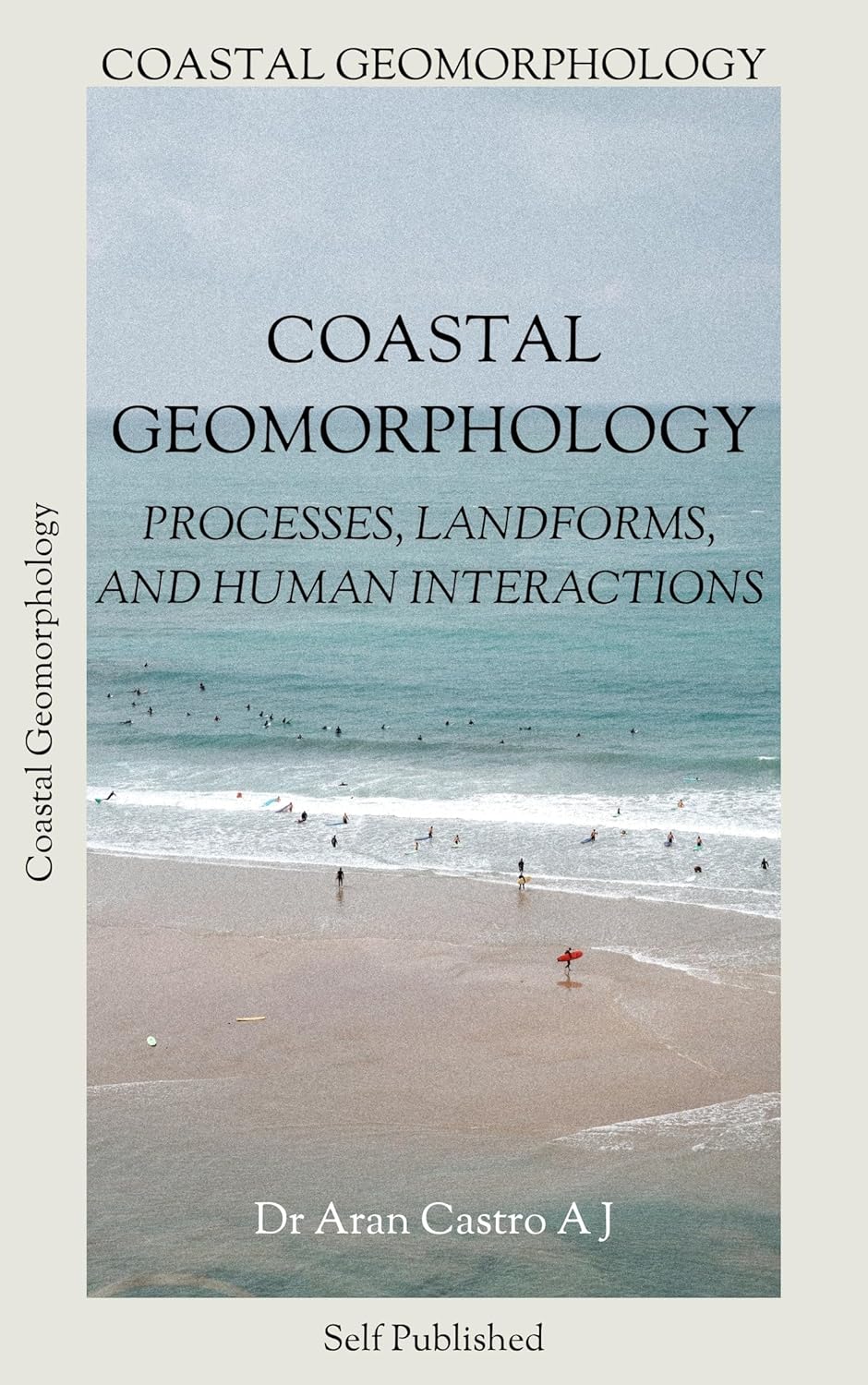 PDF eBook · Free
Processes, landforms, and human interactions. A field-and-lab reference for anyone working in geomorphology.
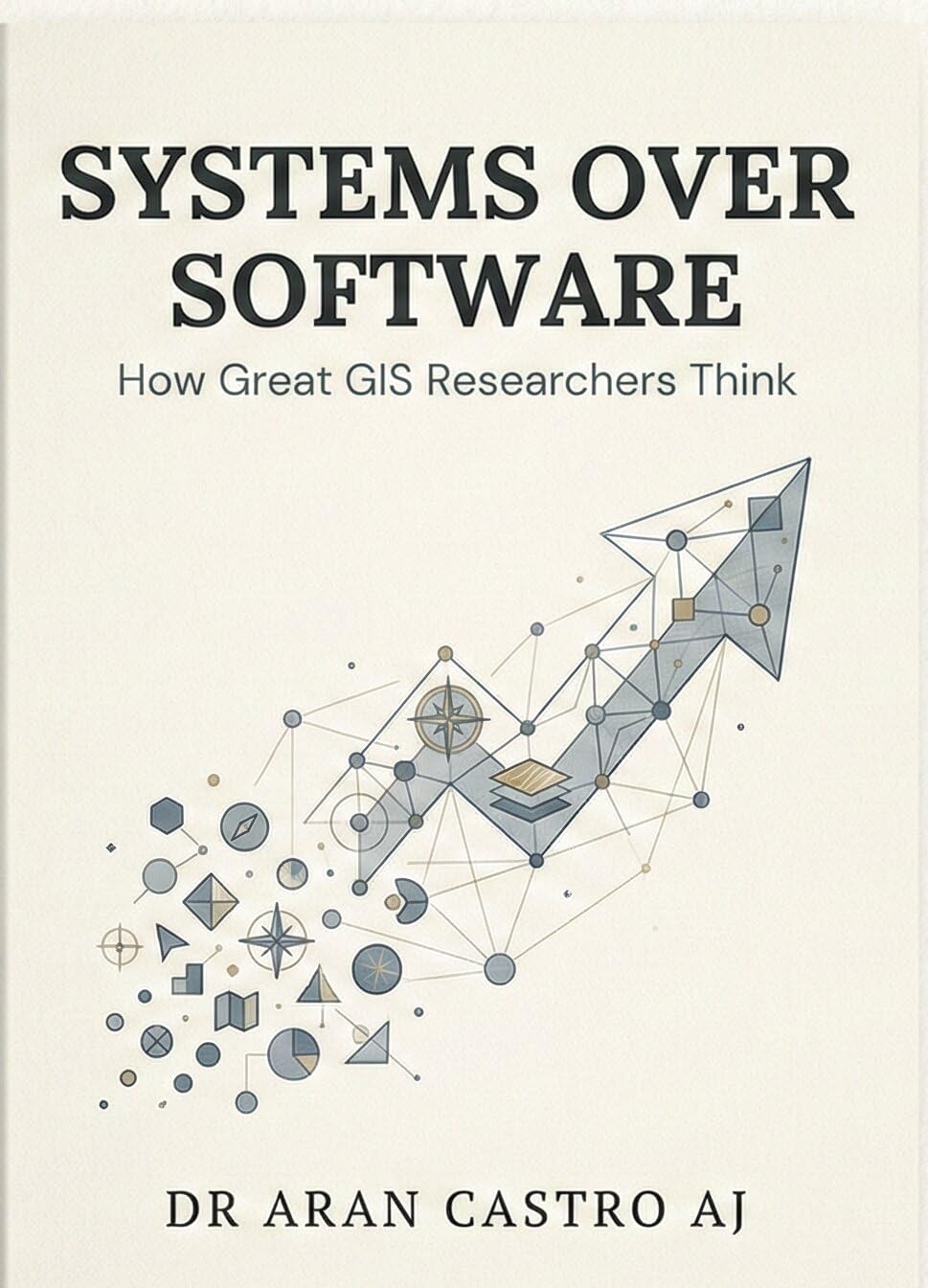 PDF eBook · Free
How great GIS practitioners think. A playbook for anyone who wants to move beyond button-clicking into real spatial reasoning.
Full workflows with formulas, tool paths and the mistakes reviewers catch. Each one pairs with a free PDF from the toolkits page.
Fill, Flow Direction, Flow Accumulation, stream threshold, Stream Order, Snap Pour Point and Watershed, with the settings I use on Indian basins, flow-accumulation thresholds by terrain, morphometric formulas and an arcpy script.
Tutorial · DSAS 6.1 · CoastalBaseline, transects and every DSAS statistic (SCE, NSM, EPR, LRR, WLR) with formulas, the attribute fields DSAS insists on, uncertainty by data source, and the errors that flip erosion into accretion.
Tutorial · ArcGIS ProThe full, defensible workflow from raw Landsat 8 bands to a publication-grade LST map, every formula, raster-calculator expression, and the unit-and-emissivity mistakes that get papers rejected.
Both. Join live online with Dr. Aran from anywhere, or in person at our Nagercoil, Kochi, Chennai or Coimbatore campuses. Same curriculum, same project, same certificate. Pick what fits your schedule.
A curious student, graduate, researcher or working professional. No prior GIS software experience is required; we start at fundamentals (coordinate systems, data handling) and build to GEE, QGIS and AI/MCP workflows.
Yes. Faculty Development Programmes and custom departmental training are a core part of the practice, delivered at institutions including the University of Madras, IIRS, SRM University and TRP Engineering College. Formats run from a one-day awareness session to a five-day intensive with lab work.
Yes, coastal vulnerability assessments, LULC change detection, enterprise reporting dashboards, FDPs and custom training curricula. Start with a WhatsApp message describing the outcome you need.
The Advanced GIS Course starts from ₹30,000, depending on mode (online or offline) and track. FDPs and institutional projects are scoped project-by-project with a written proposal. No payment until we both agree on deliverables.
YouTube teaches isolated tools in isolation. A working GIS skillset needs the whole chain: coordinate systems → data handling → analysis → accuracy assessment → cartography. The course is sequenced, project-led and live, so when something breaks on your own data you get an answer the same week rather than in a comments section. You pay for the path, not the buttons.
Yes. Online sessions are live and interactive, not recordings, led by Dr. Aran, with the same curriculum, project and certificate as the offline batches. In person adds peers in the room and shared-screen debugging; online adds flexibility. Pick what fits your schedule.
Tell me about your research, your project, or your training need. First reply within 24 hours, usually sooner, on WhatsApp.